The Secret Lives of Medieval Pigments
A Global Palette
The pigments available to medieval artists tell a story of global trade that is often underestimated. The ultramarine blue in a 9th-century Irish manuscript came from lapis lazuli mined in the mountains of Badakhshan, Afghanistan, transported over 6,000 kilometers through intermediaries in Baghdad, Constantinople, and Venice. The cinnabar (mercury sulfide) that produced the vivid reds of Catalan Romanesque frescoes was mined at Almaden in Spain, which had been operated by the Romans and continued under Islamic rule. The indigo used in Insular manuscripts arrived via Indian Ocean trade routes, reaching Northern Europe through the commercial networks of the Islamic world.
The Chemistry of Color
Medieval pigment chemistry was a sophisticated empirical science, codified in treatises such as Theophilus' De diversis artibus (c. 1125) and the later Bologna Manuscript. Theophilus describes the preparation of vermilion by heating mercury and sulfur in a sealed vessel — a process that produces the vivid red compound mercuric sulfide through a sublimation reaction. He also documents the preparation of orpiment (arsenic trisulfide), realgar, verdigris (copper acetate produced by exposing copper to vinegar vapors), and the complex procedure for making glass tesserae for mosaic work.
Kermes — a crimson dye derived from crushing the dried bodies of the scale insect Kermes vermilio, found on Mediterranean oak trees — was the primary red colorant for textiles and manuscript illumination before the introduction of cochineal from the Americas. The process of harvesting kermes was labor-intensive: thousands of insects had to be collected, dried, and ground to produce a small quantity of pigment, making it one of the most expensive coloring materials available.
The Social Economy of Color
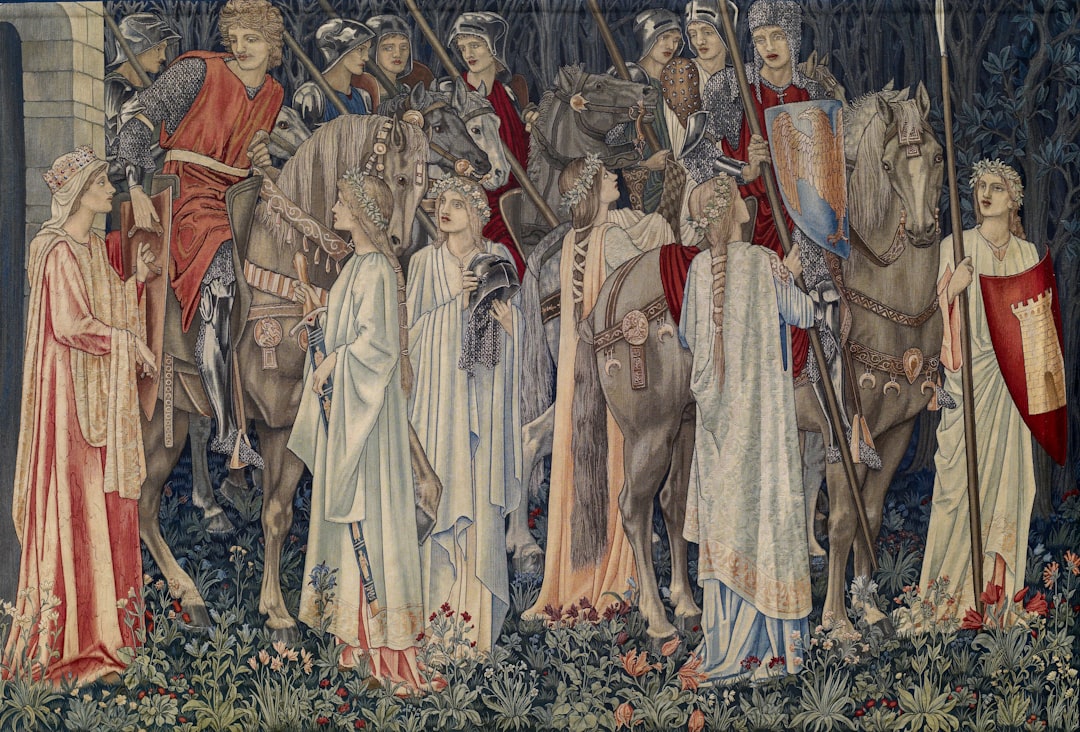
The availability and cost of pigments directly influenced the visual appearance of medieval art. Ultramarine blue, being more expensive than gold, was reserved for the most theologically significant elements of a composition — particularly the robes of the Virgin Mary. This economic constraint became an iconographic convention: the association of blue with the Virgin is as much a product of medieval pigment economics as of theological symbolism. Conversely, the use of cheaper pigments like azurite (a copper carbonate mineral) for less important figures created a visual hierarchy that reflected the actual cost of materials.
The study of medieval pigments through modern analytical techniques — X-ray fluorescence, Raman spectroscopy, and mass spectrometry — has transformed our understanding of medieval artistic practice. Pigment analysis can determine not only what materials were used but also where they were sourced, revealing trade connections that are otherwise undocumented. The presence of lapis lazuli in Insular manuscripts, confirmed by Raman spectroscopy in 2018, revised our understanding of early medieval trade networks and demonstrated that the monasteries of Britain and Ireland were connected to global commerce routes at a much earlier date than previously believed.