Byzantine Art (c. 500-1453)
Imperial Patronage and the Justinianic Program
The foundation of Constantinople by Constantine I in 330 CE established a new artistic center that would dominate the Eastern Mediterranean for over a thousand years. Under Emperor Justinian I (r. 527-565), Byzantine art reached its first golden age. The construction of Hagia Sophia (532-537), designed by the mathematicians Isidore of Miletus and Anthemius of Tralles, created an architectural space of unprecedented scale — its dome spanning 31 meters in diameter and soaring 55 meters above the floor.
The interior decorative program of Hagia Sophia combined marble revetment in colored slabs — Proconnesian white, Thessalian green, Phrygian purple, and Numidian yellow — with gold-ground mosaics that transformed the upper walls and vaults into luminous surfaces. Procopius of Caesarea, in his De Aedificiis, described the effect: "The visitor's mind is raised to God and floats aloft, thinking that He cannot be far away but must especially love this dwelling which He has chosen."
The Iconoclastic Controversy (726-843)
The theological crisis of Iconoclasm fundamentally reshaped Byzantine visual culture. Emperor Leo III's edict of 726 prohibited the veneration of religious images, arguing that the divine nature could not be represented in material form and that icon veneration constituted idolatry violating the Second Commandment. For over a century, figurative religious art was suppressed or destroyed within the empire.
The resolution of the controversy came through the theological arguments of Saint John of Damascus (c. 675-749), who distinguished between latria (worship due to God alone) and proskynesis (veneration offered to icons as representations). The Second Council of Nicaea in 787 affirmed the legitimacy of icons. The restoration of icons in 843, known as the Triumph of Orthodoxy, established the theological framework that would govern Byzantine art for the remaining six centuries of the empire.
Mosaic Technique and the Aesthetics of Light
Byzantine mosaic technique achieved a level of refinement unmatched in the medieval world. Tesserae were set at varying angles to catch and reflect light dynamically. The gold tesserae, made by applying gold leaf to a glass base and covering it with a thin layer of translucent glass, created a luminous, reflective surface that seemed to emit light from within.
The mosaic programs of San Vitale in Ravenna (547 CE) represent the pinnacle of Justinianic mosaic art. The famous panels depicting Emperor Justinian and Empress Theodora with their courts are masterpieces of formal composition: the figures are arranged in a shallow frontal plane, their identities established through inscriptions, gestures, and hierarchical positioning. The composition communicates the theological and political message of symphonia — the harmony of imperial and ecclesiastical authority.
The Macedonian Renaissance and Late Byzantine Art
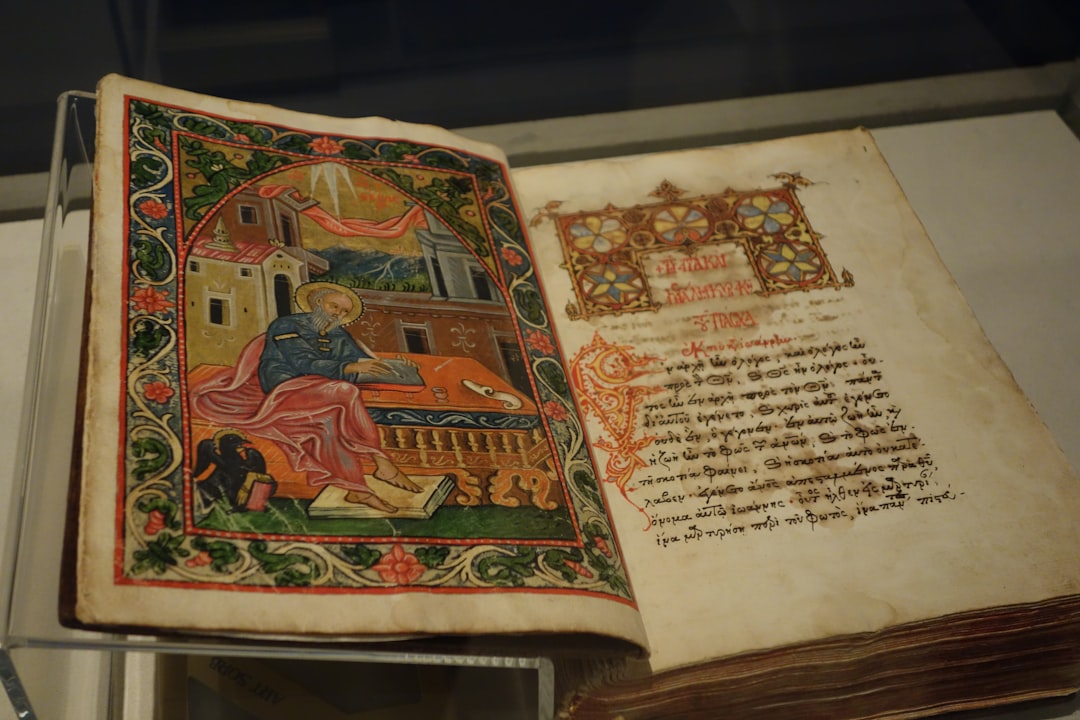
The Macedonian dynasty (867-1056) witnessed a cultural revival that brought renewed classical learning to Byzantine art. Manuscript illumination flourished, with copies of classical texts such as the Paris Psalter featuring full-page miniatures that echo Hellenistic painting in their naturalistic figure poses and landscape settings.
The late Byzantine period saw the development of the Paleologan style (1261-1453), characterized by increasingly expressive and emotionally charged imagery. The frescoes of the Church of the Chora (Kariye Camii) in Constantinople, decorated c. 1315-1321, demonstrate a compositional complexity and emotional intensity that departs from the hieratic stillness of earlier Byzantine art. The fall of Constantinople in 1453 marked the end of the Byzantine Empire, but its artistic influence continues in Russia, the Balkans, and Mount Athos.