Chartres Blue Virgin: Colored Theology
The Cathedral and Its Glass
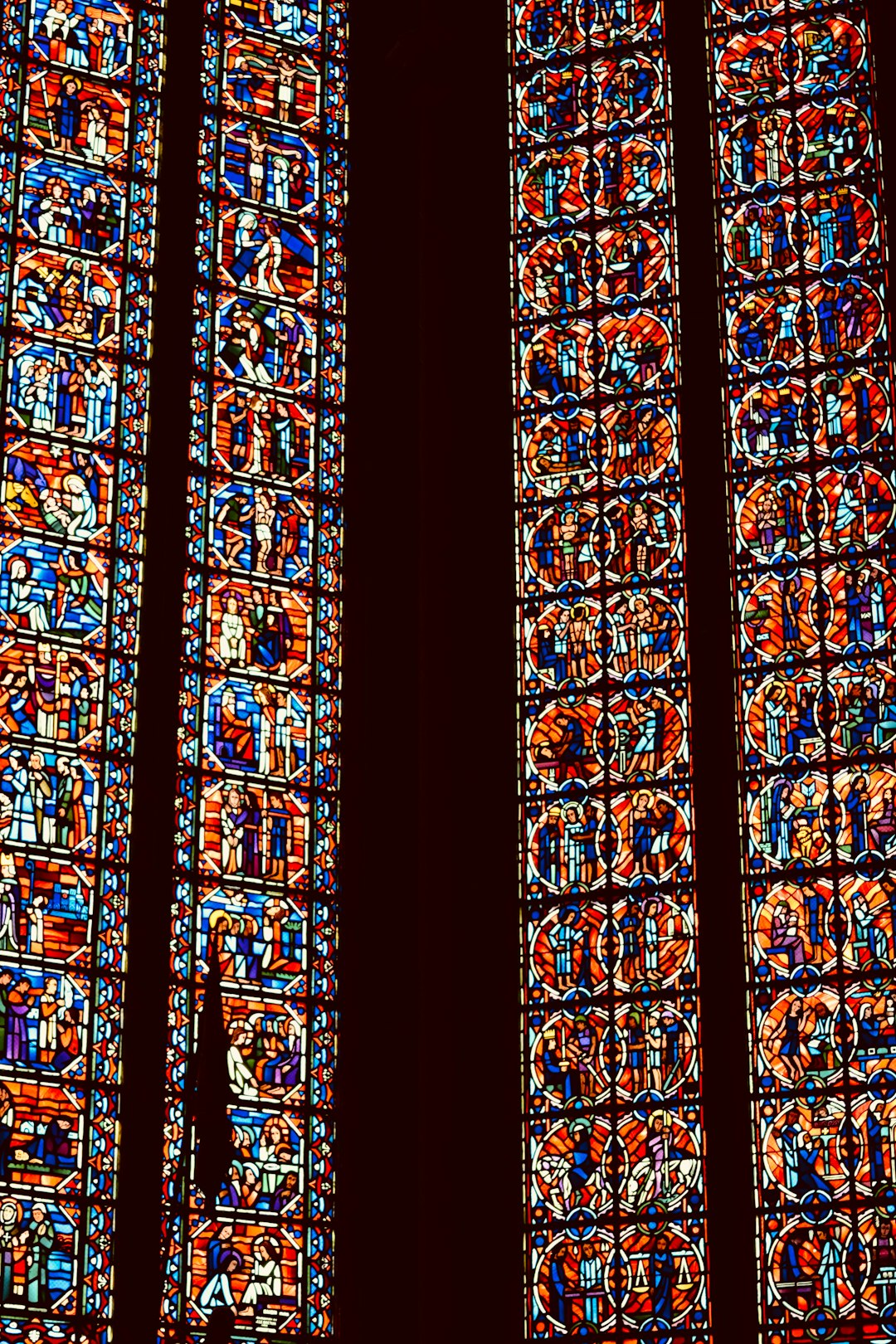
Chartres Cathedral (Cathedral of Notre-Dame de Chartres) contains the largest and most complete collection of medieval stained glass in the world — 176 windows comprising over 2,000 square meters of glass, most of it original from the 12th and 13th centuries. The cathedral survived both the French Revolution and the bombing of World War II because of its importance as a monument of French cultural heritage.
The Bleu de Chartres
The famous bleu de Chartres is a cobalt-blue stained glass whose exact composition remains a subject of scientific study. Analysis has shown that it contains cobalt oxide as the coloring agent, but the specific concentration — combined with the particular thickness of the medieval glass and the lead came profile — produces a luminosity and depth of color that later glassmakers, including the restorers of the 19th century, have been unable to replicate.
The Blue Virgin window (Notre-Dame de la Belle Verriere) in the axial chapel of the choir depicts the Virgin and Child enthroned. The Virgin is shown as the Sedes Sapientiae (Seat of Wisdom), holding the Christ Child on her lap. The window dates to approximately 1180 and survived the devastating fire of 1194 that destroyed most of the earlier cathedral. Its survival was interpreted as a sign of the Virgin's special protection of the city.
Theological Program
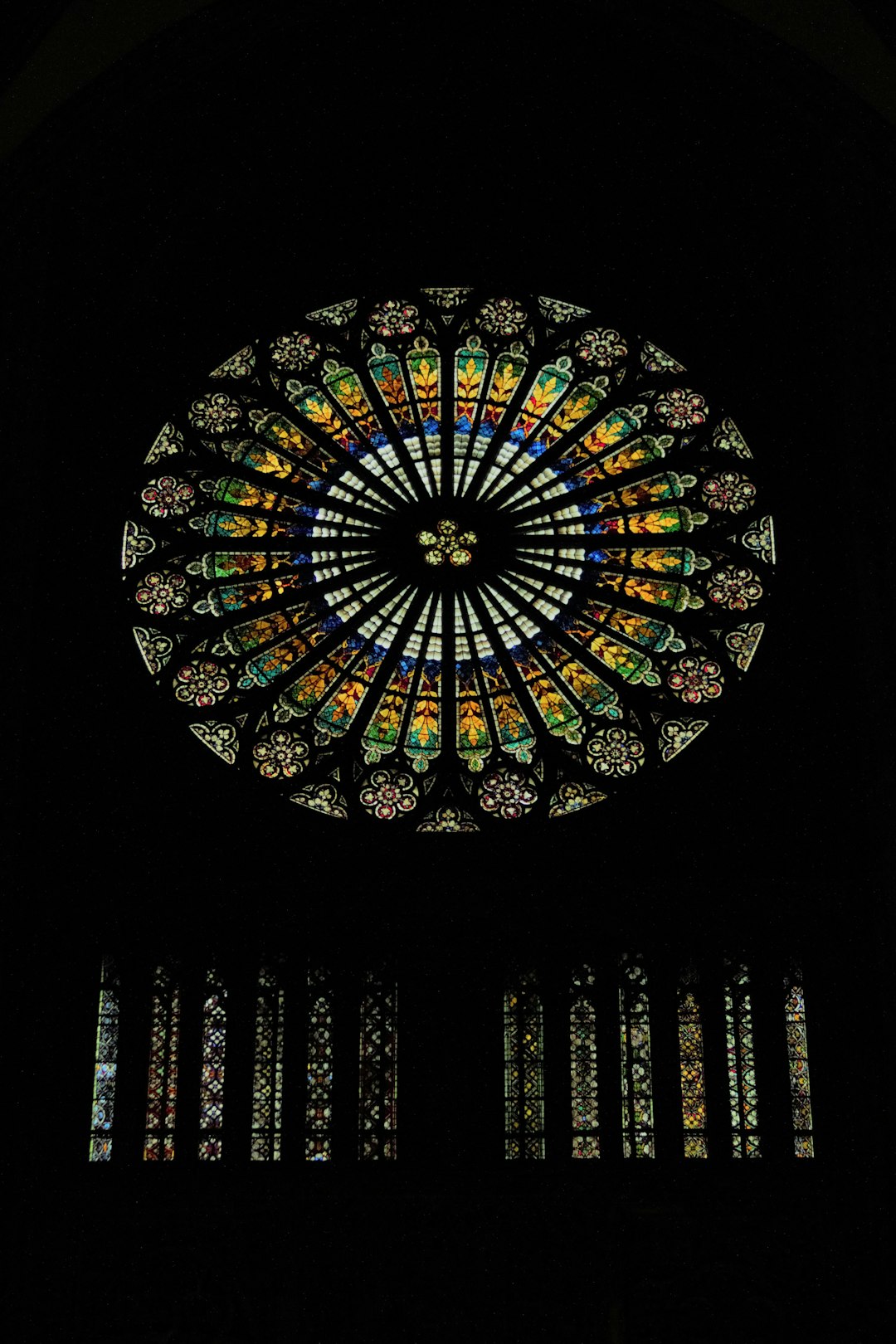
The stained glass program at Chartres functions as a comprehensive visual theology. The windows are organized by subject matter and location: the choir windows focus on the life of the Virgin and Christ, the transept windows depict Old Testament prefigurations, and the nave windows present typological cycles linking Old and New Testament narratives. The west rose window (c. 1215) presents Christ in Majesty as the final judge, surrounded by the symbols of the Four Evangelists, the 24 elders of the Apocalypse, and the signs of the zodiac — a synthesis of sacred and cosmic time.