Carolingian Art (c. 750-900)
Charlemagne's Cultural Program
When Charlemagne was crowned Emperor of the Romans on Christmas Day 800, he inherited a Europe fragmented by centuries of migration. His response was a deliberate program of cultural revival — the Carolingian Renaissance — that sought to restore the artistic and intellectual achievements of the Roman Empire.
The program was organized through the Palace School at Aachen, directed by the Northumbrian scholar Alcuin of York. Alcuin recruited scholars from across Europe — Theodulf of Orleans from Visigothic Spain, Paul the Deacon from Lombard Italy, Einhard from the Rhineland — creating an intellectual community that transcended political boundaries. This cosmopolitanism is reflected in Carolingian art, which synthesized Insular, Byzantine, Early Christian, and classical Roman sources into a coherent new style.
Illuminated Manuscript Production
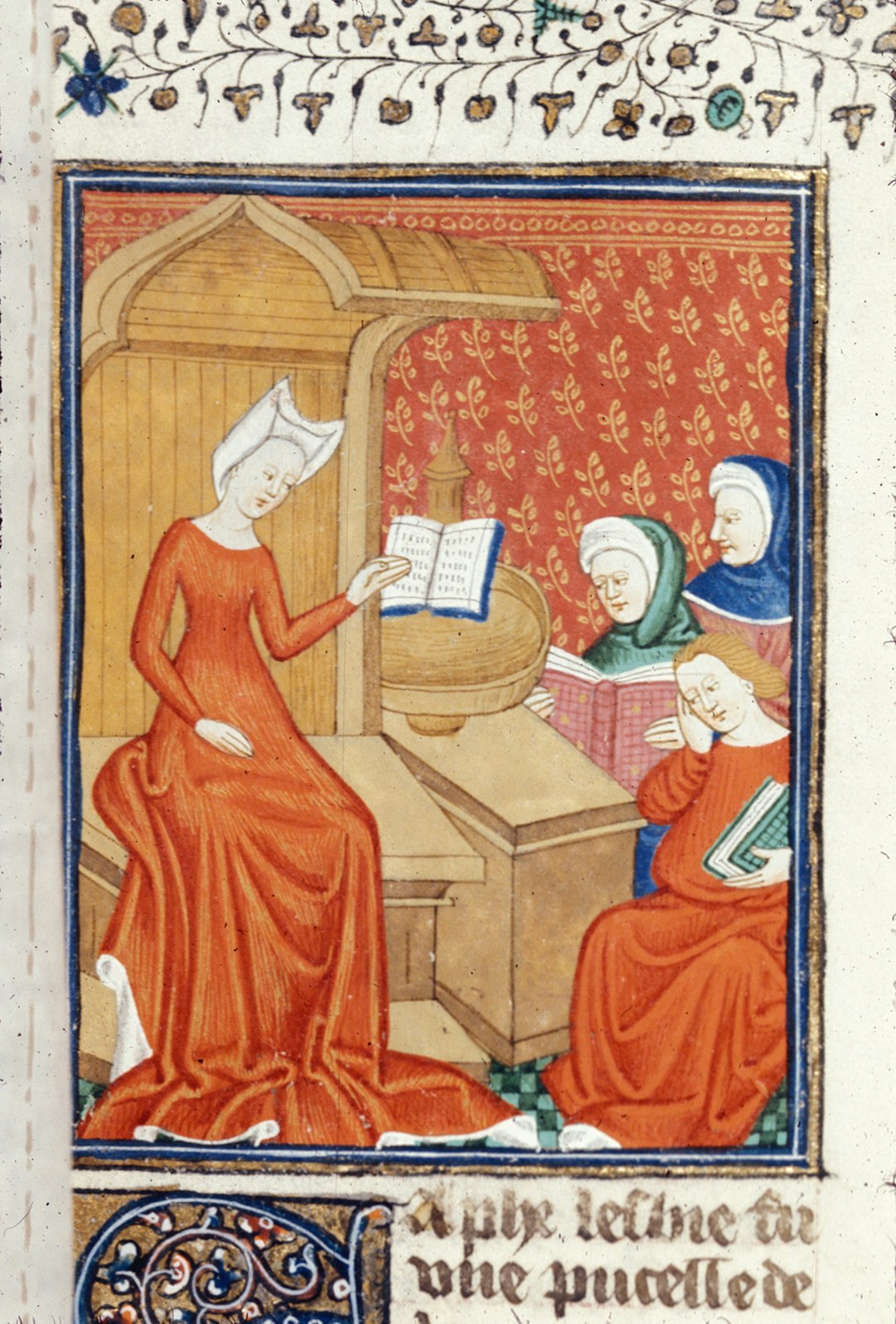
The illuminated manuscript was the primary medium of Carolingian artistic achievement. Several distinct "schools" of manuscript production have been identified, each associated with a particular monastery or court workshop. The Court School of Charlemagne (the Ada Group) produced manuscripts characterized by vigorous linear energy, brilliant color, and restless vitality owing much to Insular decorative traditions.
The Reims school, associated with Archbishop Ebbo and the Utrecht Psalter, developed a distinctive style of energetic, almost expressionistic line drawing. The ink sketches of the Utrecht Psalter — created entirely in brownish ink on vellum — illustrate each psalm with dynamic landscape vignettes populated by tiny, animated figures. This drawing style represents a radical departure from the flat, decorative conventions of earlier medieval manuscript art.
The school of Tours produced the monumental Bibles of Vivian and the Grandval Bible — enormous single-volume pandects containing the complete text of the Vulgate. These featured elaborate canon tables, evangelist portraits, and decorative initials that would influence manuscript production for centuries.
The Palatine Chapel and Architectural Innovation
The Palatine Chapel at Aachen (consecrated 805) remains the most ambitious architectural achievement of the Carolingian period. Designed by Odo of Metz, the chapel directly references San Vitale in Ravenna and Byzantine centralized planning, with an octagonal core surrounded by a sixteen-sided ambulatory. The use of a westwork — a monumental entrance block containing a chapel and gallery — was a Carolingian innovation that would influence Romanesque church design.
The chapel's interior combines Roman spolia (columns and marble brought from Ravenna and Rome) with new Carolingian craftsmanship. The bronze doors, balustrade, and eagle lectern demonstrate the high level of Carolingian metalworking skill. Charlemagne's body was interred in the chapel in 814.
Metalwork and Ivory Carving
Carolingian goldsmithing achieved extraordinary technical virtuosity. The Lindau Gospels cover (c. 870-880, now in the Morgan Library) features a crucifixion scene in gold repousse surrounded by a border of cloisonne enamel and precious stones. The Lothair Cross (c. 870, Louvre) demonstrates mastery of niello — a black metallic sulfide inlay technique — combined with gold and enamel.
Ivory carving was another Carolingian specialty. Book covers, diptychs, and liturgical objects were carved from elephant ivory imported through Mediterranean trade networks. The covers of the Lorsch Gospels (c. 810), now divided between the Vatican and the Victoria and Albert Museum, represent the high point of Carolingian ivory carving.