On December 27, 537 CE, the Byzantine Emperor Justinian I stepped into the newly completed church of Hagia Sophia — the "Holy Wisdom" — and reportedly declared: "Solomon, I have surpassed thee." Whether or not he actually spoke those words, they capture something essential about the building: from its very first moment, Hagia Sophia was understood as a monument that transcended all precedent.
The church rose on the site of two earlier basilicas on the same hill in Constantinople (modern-day Istanbul). The first, built by Constantius II in 360, was destroyed during riots. The second, built by Theodosius II in 415, burned down during the Nika Revolt of 532. Justinian ordered the third — and greatest — church to be built immediately, on a scale and in a form that would serve as an everlasting monument to imperial and divine power.
The Architects: Anthemius and Isidore
Justinian did not hire conventional builders. Instead, he chose two men of extraordinary intellectual distinction: Anthemius of Tralles, a mathematician who had written a treatise on conic sections, and Isidore of Miletus, a physicist and engineer who had taught at the great schools of Alexandria and Constantinople. They were not architects in the modern sense — they were geometers, and they approached the problem of Hagia Sophia as a problem in spatial mathematics.
The result was a building whose central dome — approximately 31 meters (102 feet) in diameter — rises 55.6 meters (182 feet) above the floor. For nearly a thousand years, until the completion of Florence Cathedral's dome in 1436, no dome in the world would surpass it. The secret of its construction was the pendentive: curved, triangular segments of masonry that transition from the square base of the building to the circular rim of the dome. This was a structural innovation of the first order, and it changed the course of architectural history.
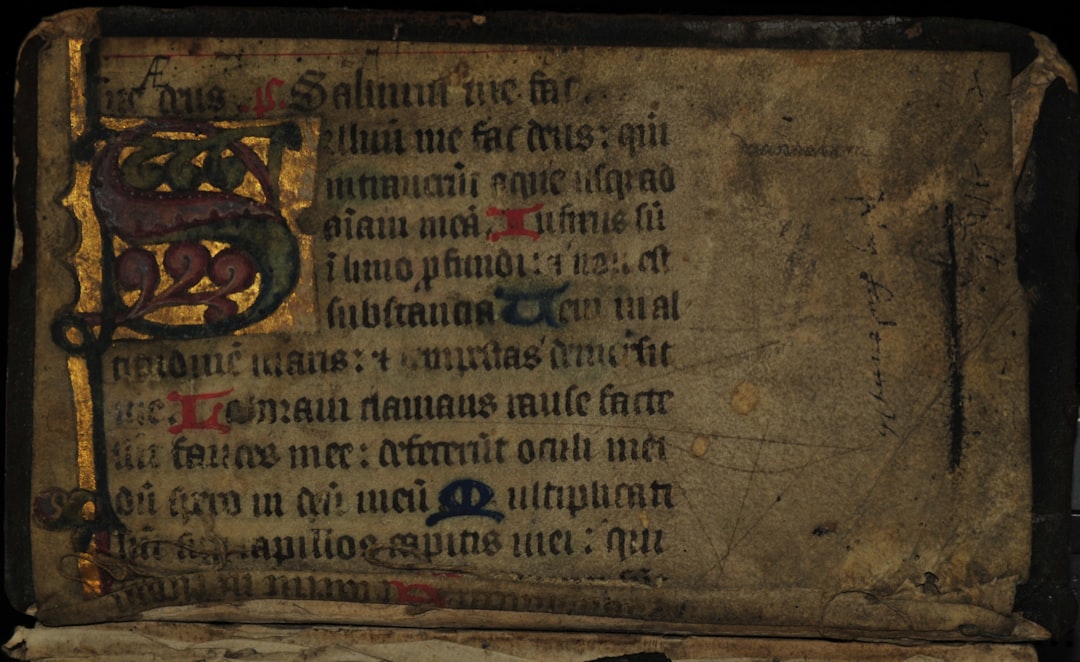
Interior view of a great domed religious building, illustrating the soaring architectural ambition of Byzantine engineering, 6th century. Architectural interior. Public Domain.
"The Dome Seems Suspended from Heaven"
The historian Procopius, who served as Justinian's official panegyrist, wrote about Hagia Sophia in his Buildings (c. 560 CE):
"The dome seems not to rest upon massive masonry, but to cover the space with its golden dome suspended from heaven. [...] The interior is flooded not with sunlight from outside, but with radiance that seems to be generated within the building itself."
This effect was deliberate. The base of the dome is pierced by 40 closely spaced windows — so many that, from below, the solid structure between them disappears, and the dome appears to float on a ring of light. The windows of the clerestory and the lower galleries added further layers of illumination. The interior was surfaced with polished marble revetment — colored marbles porphyry, verde antico, and Proconnesian white — whose reflective surfaces multiplied and diffused the light throughout the vast space.
The Golden Mosaics
The original 6th-century decoration of Hagia Sophia was primarily architectural and ornamental rather than figural. The walls were sheathed in marble slabs arranged in symmetrical patterns, the capitals were carved with intricate basket-weave and acanthus designs, and the dome was covered in gold mosaic. Figural mosaics — depicting Christ, the Virgin Mary, angels, and emperors — were added later, particularly after the end of the Iconoclastic Controversy in 843.
Among the most celebrated of these later mosaics are the Deësis panel in the south gallery (showing Christ flanked by the Virgin and John the Baptist), the Imperial Gate mosaic (showing Emperor Leo VI prostrating before Christ), and the great seraphim in the pendentives — four-winged angels whose faces were long covered but were restored in the 20th century.
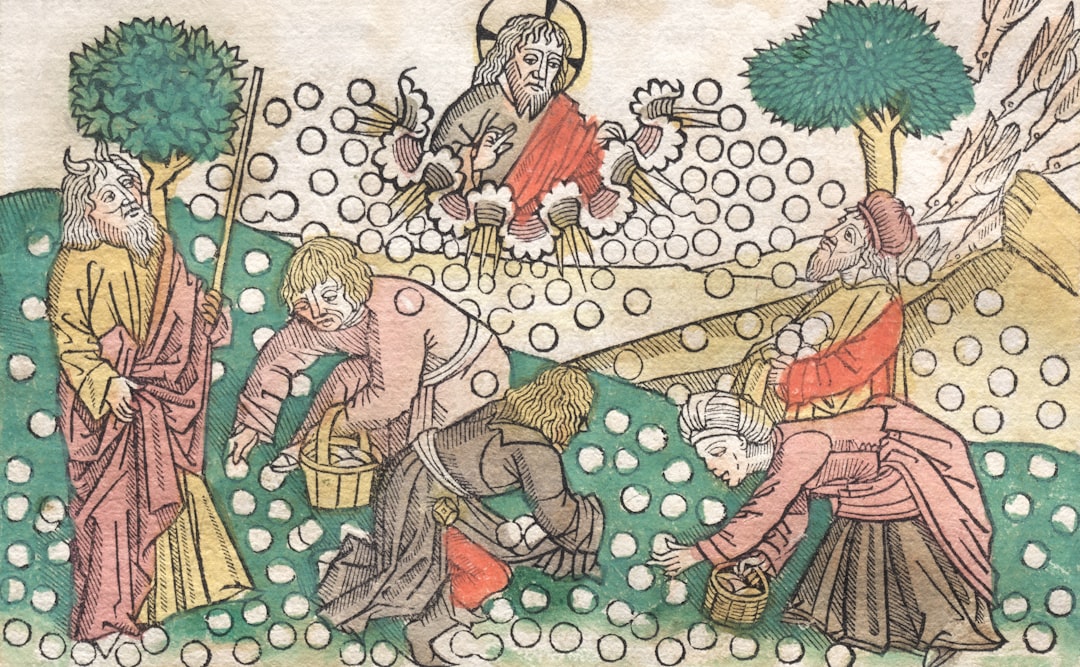
Byzantine golden mosaic detail showing the characteristic tesserae craftsmanship of the Hagia Sophia decorative tradition, 6th–12th century. Glass and gold leaf mosaic. Public Domain.
Cathedral, Mosque, Museum, Mosque
The history of Hagia Sophia is the history of the empires that controlled it. For 916 years it served as the principal cathedral of the Eastern Orthodox Church, the seat of the Patriarch of Constantinople, and the site of imperial coronations.
After the Ottoman conquest of Constantinople in 1453, Sultan Mehmed II ordered its conversion into a mosque. Minarets were added, the Christian mosaics were plastered over (which ironically preserved them), and the interior was adapted for Islamic worship with a mihrab, minbar, and calligraphic roundels. The great Ottoman architect Mimar Sinan studied Hagia Sophia intensively, and his masterpieces — the Süleymaniye Mosque and the Şehzade Mosque — are direct descendants of its architectural logic.
In 1934, under the secular reforms of Mustafa Kemal Atatürk, Hagia Sophia was converted into a museum. The mosaics were uncovered and restored, and the building became one of the most visited monuments in the world. In 2020, it was reconsecrated as a mosque, a decision that sparked international debate. Today, visitors can still enter (outside prayer times) and experience the extraordinary space that Justinian's architects created.
A Symbol of Byzantine Power
Hagia Sophia was never just a church. It was a statement — an assertion of Byzantine imperial and theological supremacy. Its dome was the sky; its gold was divine light; its marble was the order of creation. Every emperor from Justinian to Constantine XI was crowned beneath its dome. The building was the architectural expression of the Byzantine ideal: the harmony of earthly and heavenly authority, embodied in a single, awe-inspiring space.
Its influence extends far beyond Byzantium. The Ottoman mosques of Istanbul, the Russian Orthodox churches with their onion domes (ultimately derived from Byzantine models), and even the Renaissance domes of Brunelleschi and Michelangelo all owe something to the structural and aesthetic breakthroughs achieved in those six years of construction between 532 and 537 CE.
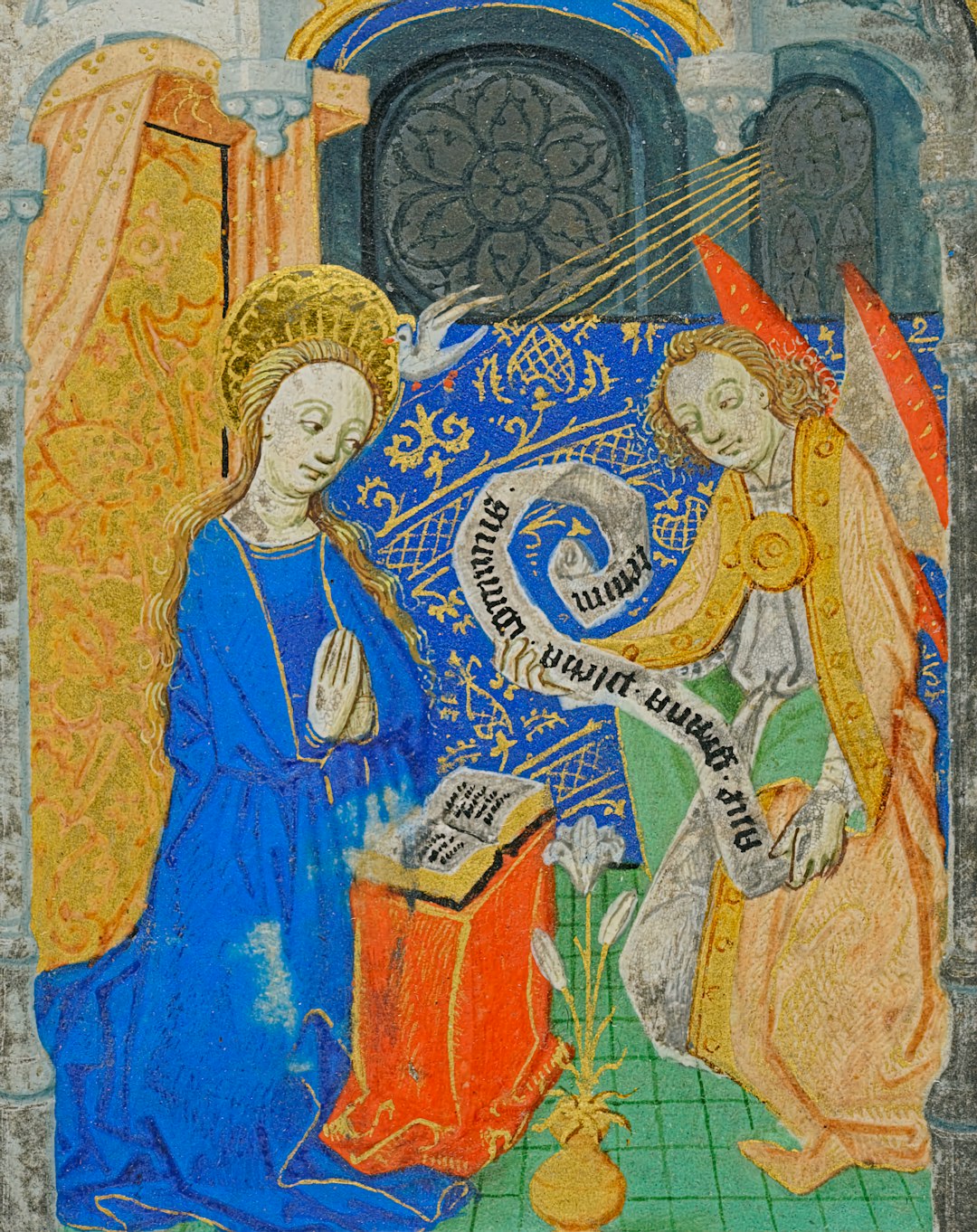
Medieval geometric decorative patterns inspired by Byzantine architectural ornament, reflecting the mathematical precision of Hagia Sophia's interior design. Decorative art detail. Public Domain.