In the 1140s, a French abbot named Suger stood before the dilapidated Abbey Church of Saint-Denis, just north of Paris, and imagined something that had never existed: a church where walls were no longer solid barriers of stone but luminous membranes of colored glass. Suger was a theologian, a statesman, and the trusted advisor of two French kings. He was also, arguably, the most influential patron of art in the entire Middle Ages.
When Suger rebuilt the choir of Saint-Denis between 1137 and 1144, he combined three architectural innovations — the pointed arch, the ribbed vault, and (soon after) the flying buttress — into a structural system that redistributed weight so efficiently that walls could be opened up for enormous windows. The result was a space flooded with light, which Suger interpreted through the philosophy of Pseudo-Dionysius the Areopagite: light was the closest material manifestation of the divine. "The dull mind rises to truth through that which is material," he wrote. "And in seeing this light, I am transported from this inferior to that higher world."
What Suger created at Saint-Denis became known as Opus Francigenum — "French Work" — and within a century, it had transformed the architecture of all of Western Europe. We call it Gothic, though the term was coined centuries later by Renaissance critics who used it as an insult, associating the style with the "barbaric" Goths who had sacked Rome.
The Engineering of Light
Pointed Arches
The pointed arch — likely borrowed from Islamic architecture encountered during the Crusades — was the first key innovation. Unlike the semicircular Romanesque arch, which always rose to a fixed height relative to its span, the pointed arch could be adjusted to any height. This gave builders enormous flexibility and reduced the lateral thrust that pushed walls outward. Pointed arches also created a visual effect of upward aspiration, drawing the eye toward the vaults.
Ribbed Vaults
Ribbed vaults replaced the solid barrel vaults of Romanesque churches. A ribbed vault is a framework of stone ribs (diagonal and transverse arches) that carries the weight of the vault to specific points — the tops of columns or piers — rather than along the entire length of the wall. Between the ribs, the vault surface could be made of lighter stone. This concentration of weight at discrete points meant that the spaces between could be opened up for windows.
Flying Buttresses
The flying buttress — an external arched support that bridges the gap between the upper wall and a separate pier — was the final piece of the structural puzzle. By carrying the outward thrust of the vaults to external supports, flying buttresses freed the walls entirely from their load-bearing function. The wall became a screen, and that screen could be made of glass.
Gothic cathedral interior demonstrating the characteristic pointed arches, ribbed vaults, and soaring verticality of 13th–15th century architecture. Architectural interior. Public Domain.
Stained Glass: Walls of Light
If the structural innovations of Gothic architecture made large windows possible, it was the art of stained glass that made them meaningful. Medieval glaziers assembled panels of colored glass — cobalt blue, ruby red, emerald green, golden yellow — held together by H-shaped lead strips called cames. The glass was made by adding metallic oxides to molten silica: cobalt for blue, copper for red, manganese for purple.
Chartres Cathedral
Chartres Cathedral, rebuilt after a devastating fire in 1194, preserves the most complete ensemble of medieval stained glass in the world: 176 windows, covering approximately 26,000 square feet. The famous Notre-Dame de la Belle Verrière — the "Beautiful Virgin Window" — dates from around 1180 and survives from the earlier church. Its deep, luminous blue, known as "Chartres Blue," was produced using a cobalt compound whose precise formulation has never been replicated. The windows of Chartres form a vast encyclopedia of biblical narrative, hagiography, and the daily life of medieval guildsmen (who donated many of the windows and are depicted at work in the lower panels).
Sainte-Chapelle
At Sainte-Chapelle in Paris, built by King Louis IX between 1242 and 1248 to house the relics of the Passion, the architectural logic of Gothic reaches its extreme conclusion. The upper chapel is essentially a glass cage: the walls are 90 percent stained glass, with only the thinnest stone mullions between the windows. Standing inside Sainte-Chapelle, surrounded by 15 immense windows depicting 1,113 biblical scenes, you understand what Suger meant when he described the church as a vessel of divine light.
Gothic stained glass window showing vibrant cobalt blue and ruby red panels depicting biblical narrative, 13th century. Stained glass on cathedral window. Public Domain.
Notre-Dame de Paris
Construction of Notre-Dame de Paris began in 1163 under Bishop Maurice de Sully and continued for nearly two centuries. It is one of the first truly Gothic cathedrals and one of the most influential. Its double ambulatory, its pioneering use of flying buttresses (added during construction when cracks appeared in the thin upper walls), its magnificent rose windows, and its sculpted portals — depicting the Last Judgment, the Life of the Virgin, and Saint Anne — made it a model for cathedral builders across Europe.
The cathedral's west facade is a masterwork of Gothic sculpture. The Gallery of Kings — a row of 28 statues representing the Kings of Judah — survived the French Revolution (when they were mistakenly identified as French kings and beheaded) and has been reconstructed. The central portal's tympanum shows Christ in Majesty, while the north and south portals are devoted to the Virgin Mary and Saint Anne, respectively.
Sculpture: From Stone to Flesh
Gothic sculpture evolved dramatically over three centuries. The earliest Gothic sculpture — on the west facade of Chartres, from around 1145 — still shows the elongated, rigid figures of late Romanesque. But by the 13th century, Gothic sculptors had discovered naturalism.
The cathedral of Reims is home to some of the most celebrated Gothic sculptures in Europe. The "Smiling Angel" (L'Ange au Sourire) on the west facade — the angel who appeared to the women at Christ's tomb — has a gentle, human smile that is utterly unprecedented in medieval art. The figures at Reims stand with a naturalistic contrapposto weight shift, their drapery falling in natural folds, their faces expressing individual emotion. This was the moment when stone began to look like flesh.
Panel Painting and the Book of Hours
The Birth of Panel Painting
While sculpture and architecture dominated the Early and High Gothic periods, the 13th and 14th centuries saw the emergence of panel painting as a major art form. In Italy, Cimabue and Duccio began to move away from the flat, hieratic style of Byzantine icons toward a more naturalistic representation. Giotto (c. 1267–1337) would take this revolution further still — but that is a story for another page.
In Northern Europe, the tradition of panel painting developed alongside the art of manuscript illumination. The Maesta altarpieces of Duccio in Siena and the great crucifixes of Cimabue in Florence established a new scale and ambition for painted devotional images.
Books of Hours
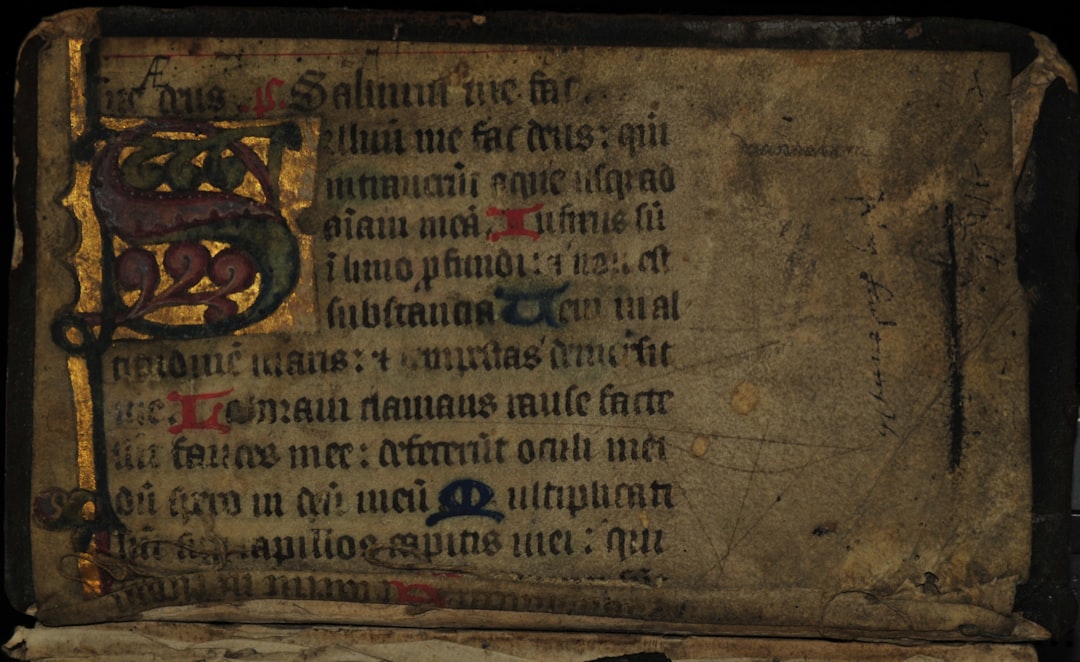
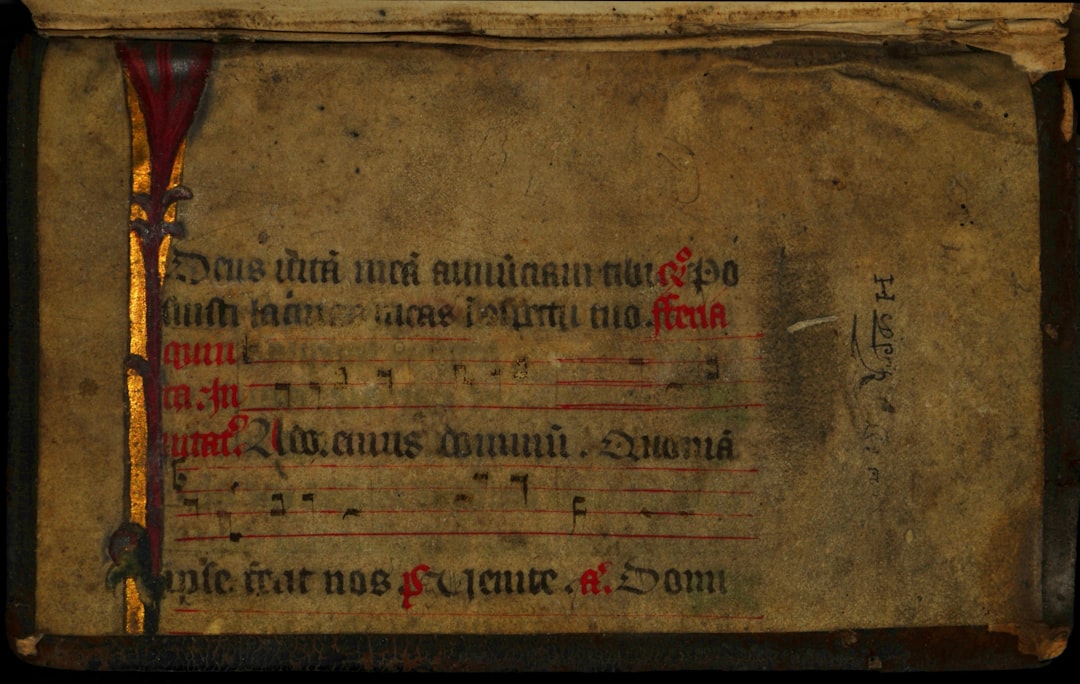
By the 14th and 15th centuries, the most important medium for Gothic painting was not the church wall but the private prayer book. Books of Hours — personal devotional manuscripts containing prayers for the eight canonical hours of the day — were produced in enormous numbers for wealthy patrons. The Très Riches Heures du Duc de Berry, painted by the Limbourg brothers around 1412–1416, is the most famous example. Its calendar miniatures — showing the Duke's châteaux against seasonal landscapes, with peasants laboring and nobles feasting — are among the most beloved images of the Middle Ages.
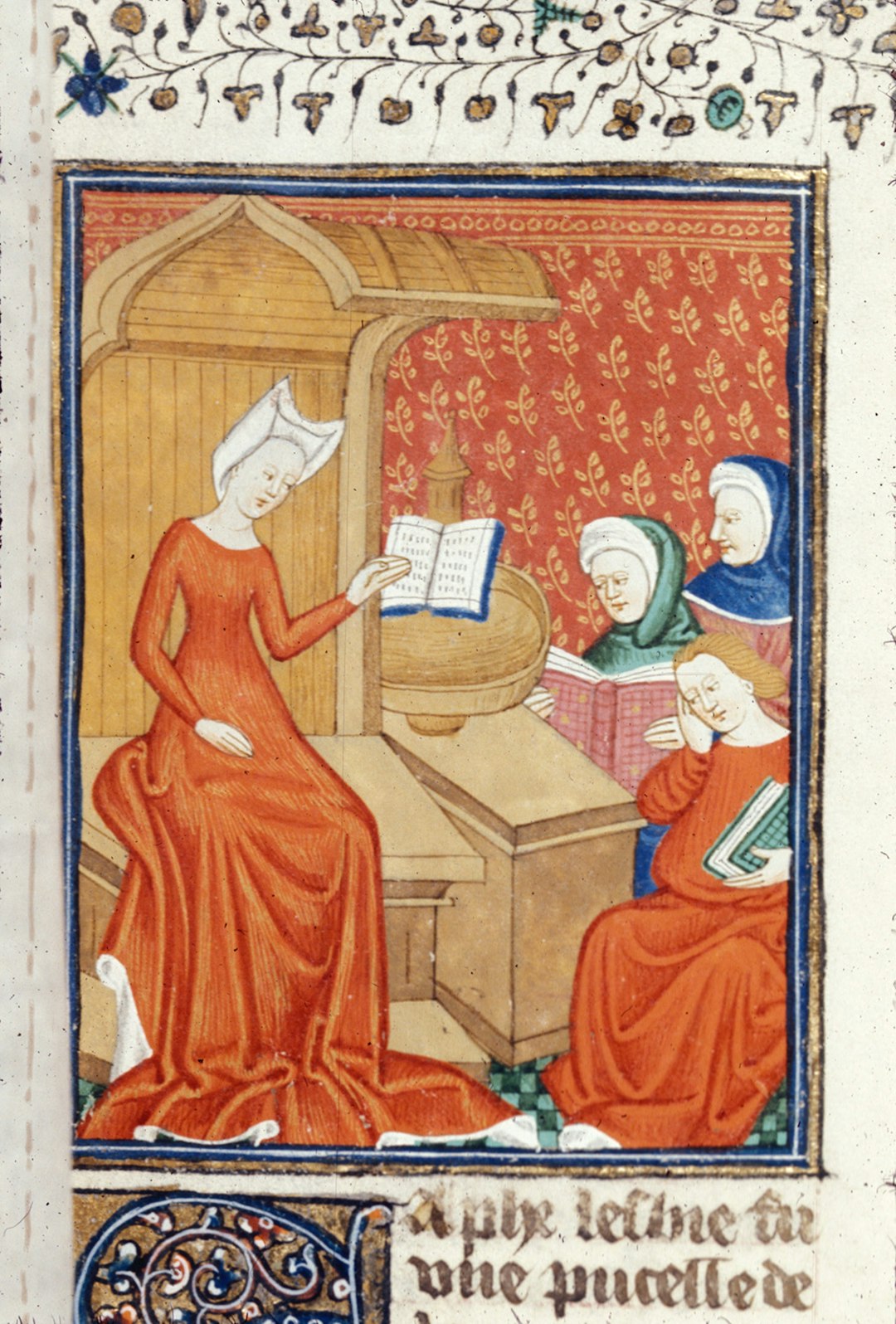
Medieval knight illustration from a Gothic illuminated manuscript, depicting chivalric culture of the 14th–15th century. Illuminated manuscript illumination. Public Domain.
From Heaviness to Lightness: The Gothic Transformation
The shift from Romanesque to Gothic was not merely a change in architectural technique. It reflected a profound transformation in medieval spirituality and aesthetics. Romanesque churches were heavy, grounded, fortress-like — appropriate for an age of violence and uncertainty. Gothic churches were light, vertical, aspirational — appropriate for an age of growing urban prosperity, scholastic confidence, and theological optimism.
The Romanesque congregation looked at carved stone and saw the weight of sin and judgment. The Gothic congregation looked through colored glass and saw the light of grace and redemption. Both were theology in visual form — but where Romanesque spoke of fear, Gothic spoke of hope.