Two Medieval Giants, Two Opposite Approaches
Imagine two rooms. In one, the walls are covered with gold mosaics that seem to glow from within — the architecture dissolves into shimmering abstraction, and figures stare at you with eternal, unblinking eyes. You feel small, reverent, transported to somewhere beyond the physical world. This is Byzantine art.
In the other room, colored light floods through walls of glass. Sculpted figures gesture, smile, and tell stories. You feel invited in, drawn to examine every detail, moved by the humanity carved in stone. This is Gothic art.
Both traditions flourished during the Middle Ages. Both aimed at representing the divine. And both reached their goals through almost diametrically opposite means. Let's explore the differences — because understanding where Byzantine and Gothic art diverge reveals something profound about how human beings visualize the sacred.
Gold vs. Glass: Blocking Light vs. Flooding It
Byzantine artists used gold-ground mosaics that block light to create an inner, supernatural glow. Look at the mosaics of San Vitale in Ravenna: the gold background eliminates any sense of physical space, placing figures in an eternal, transcendent realm. The individual glass tesserae are set at slightly different angles, so they catch and reflect candlelight from every direction, creating a living, breathing surface of light. The architecture seems to dissolve into shimmering abstraction — walls become pure radiance, and the boundary between the material and the spiritual thins to nothing.
Gothic builders did the opposite: they removed walls and replaced them with stained glass, flooding the interior with colored light. At Sainte-Chapelle in Paris, you stand inside a jewel box of light — over 6,458 square feet of stained glass transforming sunlight into a kaleidoscope of biblical narrative. Where Byzantine art creates light from within the image, Gothic art transforms external light into the image itself.
Both aimed at transcendence — via opposite routes. One blocks the outside world to create an inner luminosity. The other dissolves the wall between inside and outside, making the building itself a lens that refracts heaven onto earth.
Frontality vs. Movement: Staring Eternally vs. Leaning In
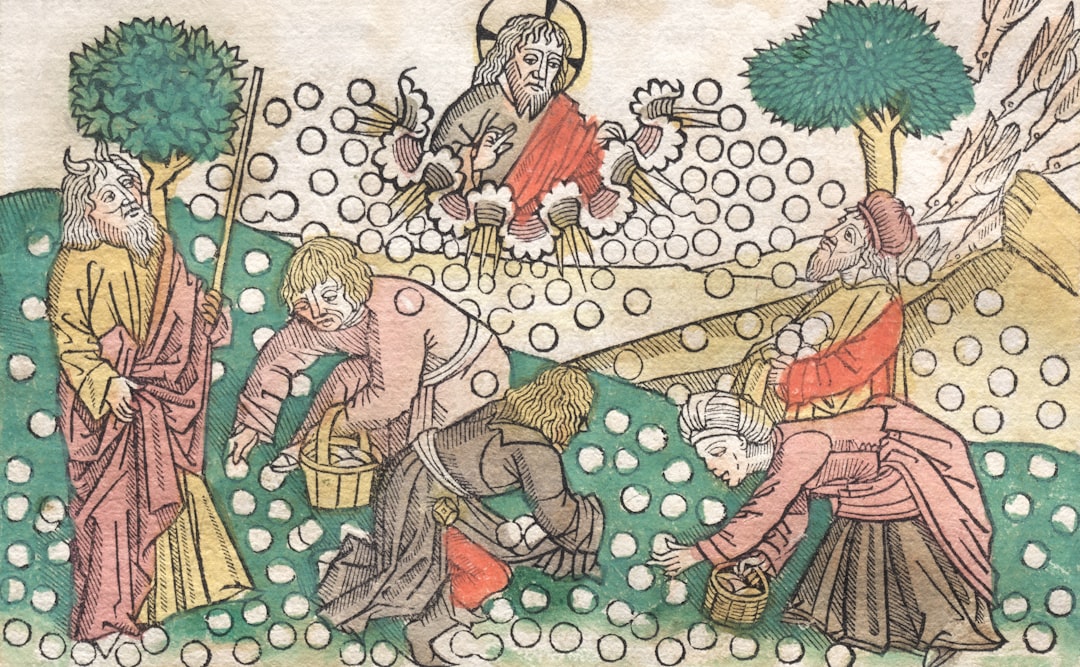
Byzantine figures stare eternally forward — unmoving, unblinking. The great mosaic of the Virgin and Child in Hagia Sophia's apse presents the Virgin seated rigidly frontal, Christ on her lap, both gazing directly at the viewer. They connect you to the eternal through stillness. There is no action, no narrative, no implied movement. There is only presence — the figures are simply there, fixed in an eternal present that transcends time itself.
Gothic figures gesture, dance, smile. The "Smiling Angel" at Reims Cathedral (c. 1250) is almost shockingly alive — she tilts her head, curves her mouth, engages you as a person, not a theological symbol. The portal sculpture at Chartres Cathedral tells entire biblical stories in carved stone, with figures that interact with each other, display emotion, and invite the viewer into their narrative world.
This difference reflects deeper theological priorities. Byzantine art presents the divine as transcendent — above and beyond human experience, approached through stillness and contemplation. Gothic art presents the divine as incarnational — entering into human experience, accessible through story and emotion. One says "behold"; the other says "come closer."
Spiritual Distance vs. Human Warmth
Byzantine art creates distance to create reverence. The icon screen (iconostasis) separates the sacred space from the congregation, establishing a boundary between the earthly and the heavenly. The viewer stands before the icon — not as an equal, but as a supplicant before the divine. This distance is not cold; it is awe-inspiring, designed to evoke the proper emotional response to encountering the sacred.
Gothic art invites you in. The portals of Chartres Cathedral are covered with hundreds of carved figures telling Bible stories, literally accessible at ground level. A medieval pilgrim could walk up to the west facade and "read" the entire history of salvation in stone, from Genesis to the Last Judgment. The art doesn't stand apart from you — it wraps around you, includes you, makes you part of the story.
Both approaches work. Standing before a Byzantine icon, you feel the weight of eternity. Walking through a Gothic cathedral, you feel the warmth of community and narrative. Different emotional registers, equally powerful.
The Fourth Crusade: When East and West Collided
In 1204, an event occurred that perfectly illustrates the complex relationship between these two traditions. Western crusaders — supposedly on their way to fight Muslims in the Holy Land — sacked Constantinople instead. They looted Byzantine art treasures by the cartload and shipped them to Venice and other Western cities.
The four bronze horses on St. Mark's Basilica in Venice? Byzantine looted art, probably from the Hippodrome of Constantinople. St. Mark's itself is Byzantine architecture planted in the heart of Gothic-influenced Venice — a strange, beautiful cultural collision. The basilica's five domes, Greek-cross plan, and lavish mosaics make it feel more at home in Constantinople than in Italy. Yet it sits at the edge of the Venetian lagoon, a Gothic city that happened to fall in love with Eastern aesthetics.
This wasn't just theft — it was cultural transmission, however violent. Western Europe's encounter with Byzantine art treasures helped fuel the artistic developments that would eventually lead to the Renaissance. The irony is almost too perfect: the crusaders who destroyed Byzantine civilization also preserved and celebrated its art.
The Iconoclast Controversy: The Great Image Debate
Between 726 and 843 CE, the Byzantine Empire was torn apart by a debate that would shape the course of art history: should religious images be allowed at all?
Emperor Leo III banned religious images, triggering riots and the persecution of icon-painters. Iconoclasts argued that depicting Christ was heresy — you can't depict the divine, and attempting to do so was idolatry. Iconophiles (image-lovers) countered that since God became incarnate in Christ, depicting Christ was not only permissible but necessary.
The iconophiles won — but the debate shaped Byzantine art forever. The trauma of Iconoclasm pushed Byzantine art toward abstraction rather than naturalism. After the restoration of icons in 843, Byzantine artists doubled down on the stylized, non-naturalistic approach that had become theologically validated. The result was an artistic tradition that prized spiritual expression over physical accuracy — a choice that gave Byzantine art its distinctive, haunting quality.
Meanwhile, Gothic sculptors were carving increasingly naturalistic figures on cathedral facades, entirely unconcerned with this theological debate. The Western tradition moved toward greater realism while the Eastern tradition deepened its commitment to abstraction — and both produced masterpieces.
Neither Was "Better" — They Were Different
It's tempting to declare a winner. Gothic art feels more "modern" — its naturalism prefigures the Renaissance, its emotional accessibility feels familiar to contemporary viewers. Byzantine art can seem stiff, remote, even alien to eyes trained on Renaissance perspective and photographic realism.
But this is a category error. Byzantine art wasn't trying to be naturalistic — it was trying to be true, in a theological sense. The frontal gaze, the gold background, the flattened space: these weren't technical limitations. They were deliberate choices designed to create a specific spiritual experience. When you stand before a Byzantine mosaic, you are meant to feel the presence of the eternal, not the illusion of a physical world.
Gothic art, by contrast, sought to bring the divine into the physical world — through light, through story, through the carved and painted details that rewarded patient looking. Both approaches worked. Both continue to move viewers today.
Byzantine through abstraction and gold. Gothic through narrative and emotion. Two different answers to the same eternal question: how do you make the invisible visible? The fact that we're still debating it over a thousand years later suggests that both traditions got something right — and that the question itself may be more important than any single answer.
Related Reading
- → Byzantine Art (4th–15th Century) — A comprehensive guide to the artistic heritage of the Eastern Roman Empire.
- → Gothic Art (12th–15th Century) — The soaring cathedrals and luminous sculpture of Western medieval Europe.
- → The Dome of Heaven: How Hagia Sophia Changed Architecture Forever — The story of Byzantium's greatest building.
- → Early Christian Art (2nd–6th Century) — The artistic foundations from which Byzantine art emerged.
Frequently Asked Questions
References
Belting, Hans. Image and Its Public in the Middle Ages: Form and Function of Early Paintings of the Passion. Aristide D. Caratzas, 1990.
Cormack, Robin. Writing in Gold: Byzantine Society and Its Icons. Oxford University Press, 1985.
Erwin Panofsky. Gothic Architecture and Scholasticism. Meridian Books, 1957.
Kitzinger, Ernst. Byzantine Art in the Making: Main Lines of Stylistic Development in Mediterranean Art, 3rd–7th Century. Harvard University Press, 1977.
Sauerländer, Willibald. Gothic Sculpture in France, 1140–1270. Thames & Hudson, 1972.